What To Do When Your AC Stops Working in the Middle of a Texas Summer
There are few things more stressful than walking into a hot house on a 100-degree Texas afternoon and realizing your air conditioner isn't running. Before you panic, there are a few things worth checking on your own — and some clear signs that it's time to call a professional for emergency AC repair in DFW.
Start Here — Check These Things First
Before assuming the worst, run through this quick checklist. Some AC issues have surprisingly simple causes.
Check your thermostat
Make sure your thermostat is set to Cool and that the temperature is set lower than the current room temperature. It sounds obvious, but an accidentally bumped thermostat setting is more common than you'd think — especially if you have kids in the house.
Also check the batteries if your thermostat is battery-powered. A dead thermostat won't send any signal to your AC system at all.
Check your breaker panel
Go to your electrical panel and look for any tripped breakers. A tripped AC breaker will be in the middle position — not fully on or fully off. Flip it all the way off, then back on. If it trips again immediately, stop and call a technician. A repeatedly tripping breaker is a sign of a deeper electrical issue that needs professional attention.
Check your air filter
A severely clogged air filter can restrict airflow so badly that your system shuts itself down as a safety measure. Pull the filter out and hold it up to the light. If you can't see light through it, it needs to be replaced. A clean filter costs a few dollars and takes two minutes to swap out.
Check your outdoor unit
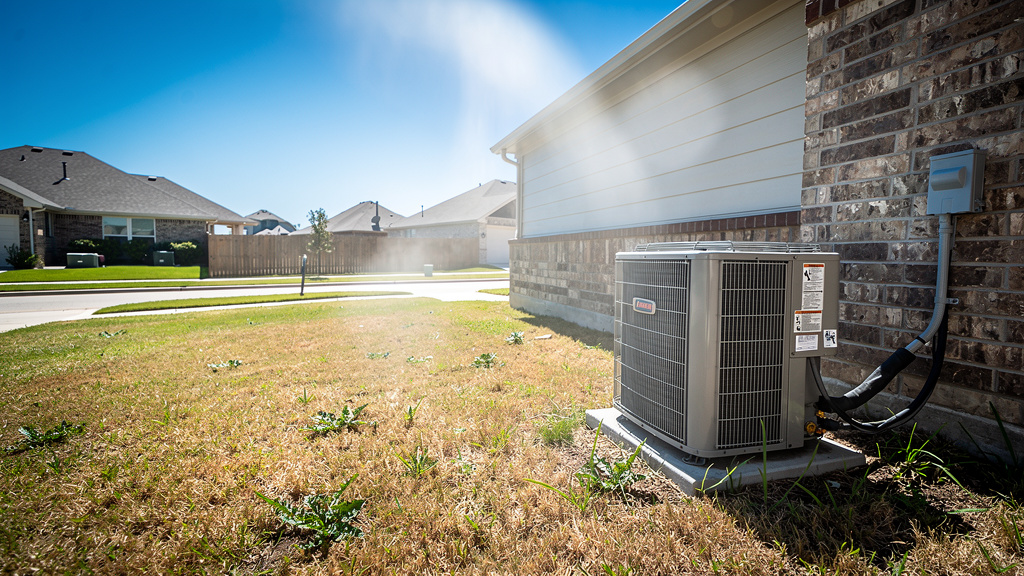
Go outside and look at your AC condenser — the large unit that sits outside your home. Is the fan running? Is there ice forming on the unit or the refrigerant lines? Is there any visible debris blocking the unit? A frozen or blocked condenser can shut your system down entirely.
When It's More Than a Simple Fix
If you've checked all of the above and your AC still isn't working, the issue is likely something that requires a licensed HVAC technician. Common causes at this point include:
- Refrigerant leak — your system needs refrigerant to cool the air, and a leak will cause it to stop functioning
- Compressor failure — the compressor is the heart of your AC system, and when it fails the system won't cool at all
- Electrical component failure — capacitors, contactors, and other electrical components fail over time and can cause your system to stop running
- Blower motor failure — if the fan that moves air through your home stops working, you'll get no airflow even if the system is technically running
These are not DIY repairs. Attempting to fix refrigerant issues or electrical components without the right training and equipment can be dangerous and can cause further damage to your system.
How to Stay Safe While You Wait
If your AC is down and it's hot, your priority is keeping everyone in the home comfortable and safe while you wait for a technician to arrive.
- Use fans to create airflow — a ceiling fan or box fan won't cool the air, but moving air feels significantly cooler on your skin
- Close your blinds and curtains — direct sunlight through windows adds a significant amount of heat to a room
- Stay hydrated — when it's hot inside, your body works harder to regulate its temperature
- Move to the lowest level of your home — heat rises, so the ground floor is typically cooler than upper floors
- Check on vulnerable family members — young children, elderly adults, and pets are at higher risk in extreme heat and may need to be moved to a cooler location
If indoor temperatures are rising to dangerous levels — especially with vulnerable individuals in the home — don't wait. That's an emergency situation.
When To Call for Emergency AC Repair
Some situations call for immediate help rather than waiting for a next-day appointment. You should call for emergency AC repair right away if:
- Your AC has stopped working completely during extreme heat
- Indoor temperatures are rising and people in the home are at risk
- You hear loud banging, grinding, or screeching from your system
- You smell burning or notice electrical odors
- You see water leaking heavily from the indoor unit
- You've checked the thermostat, filter, and breaker and nothing has helped
In the Dallas–Fort Worth area, summer heat can become dangerous quickly — especially for children, elderly adults, and pets. Don't wait it out if the situation feels urgent.
The Best Way to Avoid This Situation Next Time
The most effective way to prevent an emergency AC breakdown is routine maintenance. An annual tune-up — ideally scheduled in the spring before the Texas heat arrives — gives a technician the chance to catch small problems before they become expensive failures.
During a maintenance visit, a technician will check refrigerant levels, clean the coils, inspect electrical components, test the thermostat, and make sure everything is running the way it should. It's a small investment that can save you from a much larger one.
MillionAire Heating & Air Is Ready When You Need Us
If your AC has stopped working and you need fast, professional help in the Dallas–Fort Worth area, MillionAire Heating & Air Conditioning is ready to respond. Our licensed technicians diagnose the real problem and fix it right — not just patch it temporarily.
Call us at (817) 863-0747 or visit our emergency AC repair page to learn more about how we can help.